
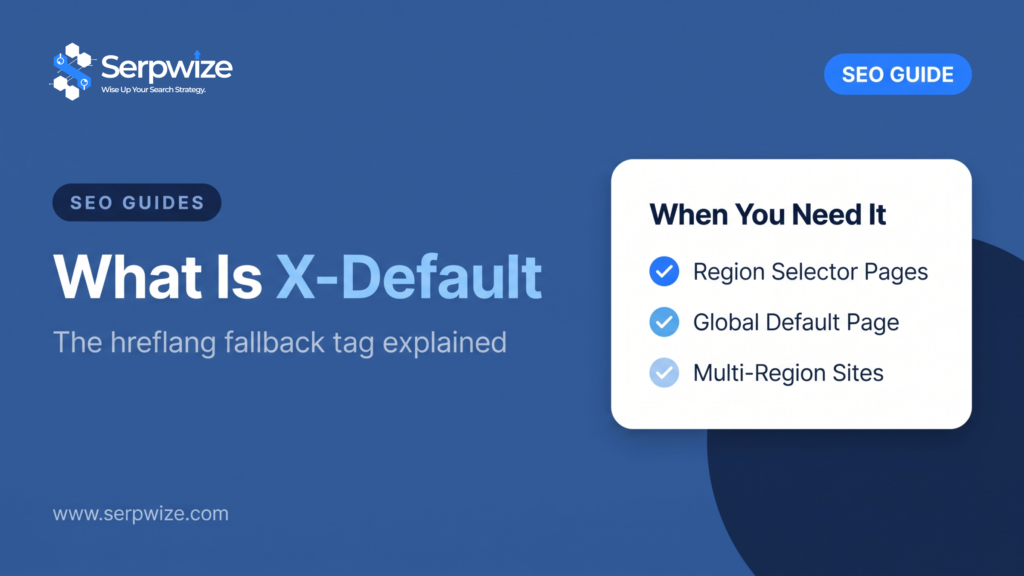
X default is a special value used in hreflang tags to tell Google which page to show a user when none of your other language or region targets match their settings. It is the fallback, not a language code, and skipping it is one of the most common international SEO mistakes.
How X Default Works
A standard hreflang tag looks like hreflang="en-us" or hreflang="fr", targeting a specific language or region. The x-default tag, written as hreflang="x-default", has no language restriction. It tells Google: “if a visitor does not match any of the other tags, show them this page.”
When You Need It
- A language or country selector page that lets visitors choose their region manually.
- A global default page, often the English or primary-market version, shown to everyone outside your explicitly targeted regions.
- Any site targeting multiple regions where you want a defined catch-all rather than letting Google guess.
What Happens Without It
Without an x-default tag, Google has no explicit instruction for visitors outside your targeted regions and falls back to its own judgment, which can serve the wrong regional version, split ranking signals across pages that should be treated as one set, or simply ignore the hreflang cluster altogether in ambiguous cases.
Frequently asked questions
Is x default required for every hreflang setup?
It is not strictly required, but Google explicitly recommends it for any site with more than one regional or language variant, to remove ambiguity about fallback behaviour.
Which page should x default point to?
Usually your primary global page – often the English-language or default-market version, or a language selector page if you have one.
Can x default and a language-specific hreflang tag point to the same URL?
Yes. It is common for the x-default tag and the primary market’s language tag to reference the same page.
Serpwize handles international and multi-region technical SEO, including hreflang implementation, as part of every engagement. See our SEO outsourcing service.